
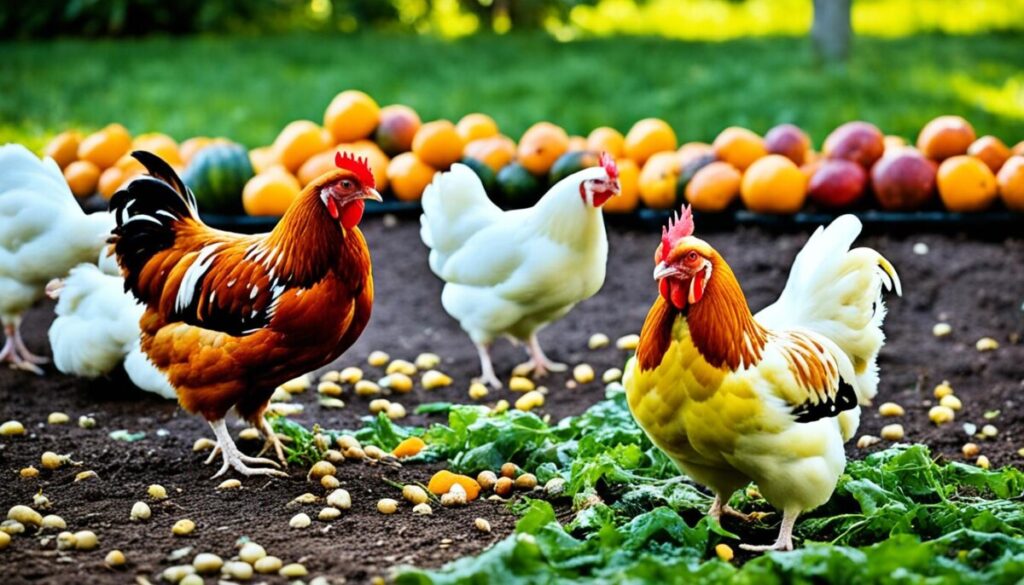
As a backyard chicken owner, you may be wondering if your feathered friends can enjoy the deliciousness of squash and its seeds. Chickens have a varied diet, and incorporating squash into their feeding routine can be a healthy treat. But how should you prepare it for them, and is it safe for them to consume?
Squash, including pumpkins, acorn squash, zucchini, and others, is safe for chickens to eat. It is important, however, to ensure that the tough skin of squash doesn’t hinder their access to the soft flesh and seeds within. By preparing the squash properly, you can provide a nutritious snack that is rich in vitamins and minerals for your chickens.
Key Takeaways:
- Chickens can safely eat various types of squash, including pumpkins, acorn squash, and zucchini.
- Squash is a nutritious treat for chickens, as it is rich in vitamins and minerals.
- Squash should be prepared by cooking, dicing, or mashing it to make it easier for chickens to eat and digest.
- Chickens should be fed squash in moderation as a supplementary food item, as it should not make up the majority of their diet.
- Always prioritize the health and well-being of your chickens by feeding them responsibly and considering their nutritional needs.
Nutritional Profile of Squash
Squash is a versatile and nutritious vegetable that offers a wide array of vitamins and minerals essential for the health and well-being of chickens. Let’s explore the nutritional benefits of squash and understand why it is a valuable addition to their diet.
Vitamins in Squash
Squash is packed with vitamins that contribute to the overall health of chickens. It contains an impressive amount of B vitamins, including B2 (riboflavin), B6 (pyridoxine), and folate. These vitamins play a crucial role in metabolism, energy production, and proper nerve function. Additionally, squash is rich in vitamin K, essential for blood clotting and bone health. It also provides chickens with vitamin A and beta carotene, promoting healthy vision and supporting their immune system.
Minerals in Squash
Chickens can benefit from the minerals found in squash. It is a good source of manganese, which aids in bone formation and metabolism. Squash also contains magnesium, phosphorus, and potassium, important for proper muscle function, electrolyte regulation, and fluid balance in chickens. Additionally, it offers essential minerals like iron and zinc, which support cell growth and development, as well as immune system function.
Overall, squash provides chickens with a diverse range of vitamins and minerals that contribute to their growth, development, and overall health.
| Nutrient | Amount per 100g of Squash |
|---|---|
| Vitamin B2 (Riboflavin) | 0.11 mg |
| Vitamin B6 (Pyridoxine) | 0.09 mg |
| Folate | 11 mcg |
| Vitamin K | 4.3 mcg |
| Vitamin A | 32 IU |
| Beta Carotene | 400 mcg |
| Manganese | 0.15 mg |
| Magnesium | 12 mg |
| Phosphorus | 22 mg |
| Potassium | 246 mg |
| Iron | 0.36 mg |
| Zinc | 0.2 mg |
“Squash is a valuable addition to a chicken’s diet, providing essential vitamins and minerals that support their overall health and well-being.”
Health Benefits of Squash for Chickens
Squash offers various health benefits for chickens. It provides essential vitamins and minerals that support overall health and well-being, including *vitamins for chickens* and *minerals for chickens*. Squash is rich in *vitamin A*, which promotes good vision and a healthy immune system. It also contains *vitamin K*, which is essential for blood clotting and bone health.
In addition to vitamins, squash is a good source of *hydration for chickens* due to its high water content. This is especially beneficial for chickens during hot weather or when their water supply is limited. Keeping chickens properly hydrated is vital for their overall health and egg production.
Furthermore, squash seeds possess *insecticidal properties* that may help keep parasites like mites and lice at bay. The compound *cucurbitin*, present in these seeds, acts as a natural pesticide against these pests.
All in all, incorporating squash into your chickens’ diet can contribute to their well-being by providing them with essential nutrients, hydration, and natural protection against parasites.

| Nutrient | Amount per 100g |
|---|---|
| Vitamin A | 334 IU |
| Vitamin K | 2.6 mcg |
| Vitamin C | 17.9 mg |
| Vitamin E | 1.44 mg |
| Potassium | 340 mg |
| Magnesium | 34 mg |
| Phosphorus | 42 mg |
| Calcium | 24 mg |
| Iron | 0.8 mg |
Preparing Squash for Chickens
Squash should be prepared for chickens to make it easier for them to eat. Cooking the squash and dicing or mashing it can help soften it and make it more digestible for chickens.
However, chickens can also eat squash raw, as long as the skin is split or it is smashed open for them. It’s important to ensure that the squash pieces are small enough for chickens to swallow whole, as they do not chew their food.
Cooking the squash may slightly reduce its nutrient content, but it can make it more appealing to chickens.
“The best way to prepare squash for chickens is to cook it and dice or mash it for easier consumption.”
Types of Squash Chickens Can Eat
Chickens can enjoy a variety of squash types as part of their diet. Here are some common squash varieties that chickens can safely consume:
- Pumpkins: Chickens can eat pumpkins, including the flesh and seeds. However, they may find the slimy “guts” of pumpkins less appealing.
- Acorn Squash: Acorn squash is another type of squash that chickens can eat. They can enjoy both the flesh and seeds.
- Zucchini: Chickens are especially fond of zucchini, and they may even be able to eat the skin of this squash variety.
- Straightneck Squash: Straightneck squash is a type of summer squash that chickens can enjoy.
- Crookneck Squash: Chickens can also eat crookneck squash, which is similar to straightneck squash.
Squash seeds are generally healthy for chickens, but it’s important to be cautious with larger seeds that could pose a choking hazard.
Can Chickens Eat Squash Cooked?
Chickens can indeed eat cooked squash and may even prefer it over raw squash. Cooking the squash softens it, making it easier for chickens to eat and digest. There are several simple ways to cook squash for chickens:
- Baking: Place the squash in the oven and bake it until it softens. Once cooked, you can mash the flesh and serve it to your chickens.
- Roasting: Roast the squash until it becomes tender. After roasting, remove the skin and mash the flesh before feeding it to your chickens.
Benefits of Cooked Squash for Chickens
Cooking squash for chickens has a few key advantages:
- Increased palatability: Cooking squash can enhance its taste and aroma, making it more enticing to chickens.
- Easier digestion: The cooking process softens the squash, making it more digestible for chickens.
- Reduced risk of choking: Cooking helps break down the squash’s fibers, reducing the likelihood of choking.
While cooking squash may slightly reduce its nutrient content, it remains a healthy and nutritious treat for chickens.
When cooking squash for your chickens, it’s important to avoid adding any harmful ingredients such as garlic, onions, salt, sugar, butter, or seasoning. Stick to plain, cooked squash to ensure the health and well-being of your feathered friends.
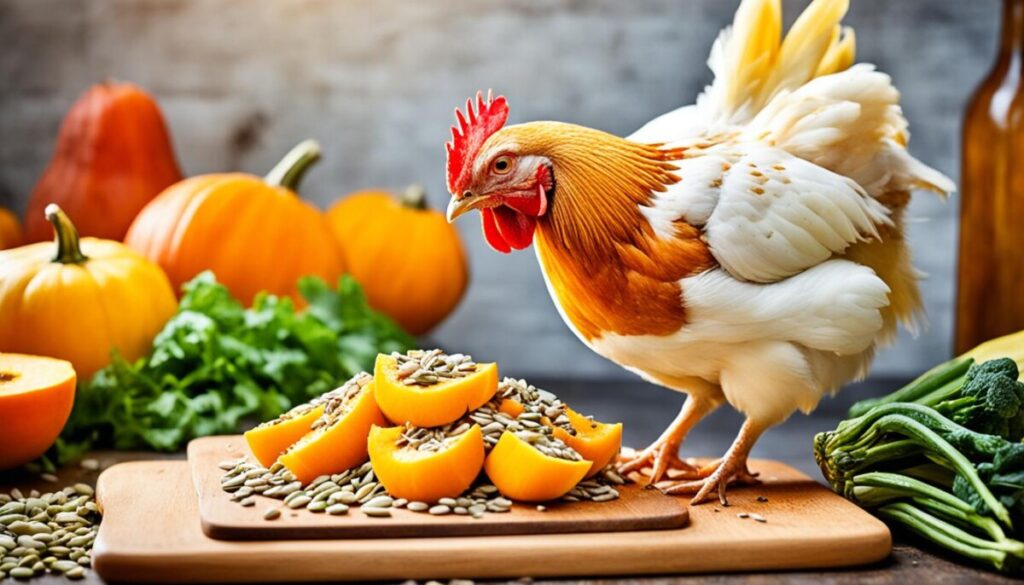
Beware of Pesticides on Grocery-Bought Squash
Squash bought from the grocery store may have been treated with pesticides, which can be harmful to chickens. It is best to buy organic squash or wash conventionally-grown squash thoroughly before giving it to chickens. Pesticides can build up in tissues and lead to serious health problems in chickens, including cancer, nervous system disorders, and organ damage. However, most squashes are prepared without their skins, which reduces the amount of pesticides absorbed. Still, it’s important to take precautions to protect your chickens’ health.
If you’re unsure whether the squash you have is organic or conventionally-grown, it’s highly recommended to wash it thoroughly. Washing can help remove some of the pesticide residues on the surface of the squash. Start by rinsing the squash under cold, running water. Use a vegetable brush or your hands to gently scrub the skin, ensuring that all surfaces are cleaned. This can help reduce the amount of pesticides that may be ingested by your chickens.
Benefits of Organic Squash for Chickens
Organic squash is a great choice for feeding chickens because it is grown without the use of synthetic pesticides or fertilizers. By choosing organic squash, you can minimize the exposure of your chickens to potentially harmful chemicals. Organic farming practices prioritize soil health, biodiversity, and sustainable agriculture, resulting in a healthier and more nutrient-dense product. Feeding organic squash to chickens can provide them with a safer and more natural food source, supporting their overall well-being.
| Benefits of Organic Squash for Chickens |
|---|
| 1. Reduced pesticide exposure |
| 2. Higher nutrient content |
| 3. Supports sustainable agriculture |
| 4. Safer and more natural food source |
When buying organic squash, look for certifications such as USDA Organic or a similar organic labeling program. These certifications ensure that the squash has been grown and processed according to strict organic standards. By choosing organic squash for your chickens, you can provide them with a healthier and safer dietary option.
It’s important to prioritize the well-being of your chickens by being mindful of the squash you feed them. Whether you opt for organic squash or choose to wash conventionally-grown squash, taking these steps can help minimize the risks associated with pesticide exposure. By providing your chickens with safe and nutritious food, you can contribute to their overall health and happiness.
How Often Can Chickens Have Squash?
Squash should be fed to chickens in moderation as a treat or supplement to their regular diet. While squash is a healthy and nutritious food for chickens, it should not make up the majority of their diet. The majority of a chicken’s calories should come from their chicken feed, which is specifically formulated to provide all the necessary nutrients for their growth and well-being.
Feeding chickens squash in moderation ensures that they receive a balanced diet and prevents them from consuming excessive amounts of any one food. Generally, treats like squash should only make up a small portion of a chicken’s diet, accounting for about 10% or less of their overall food intake.
The amount of squash to feed chickens depends on the size of the flock. As a general guideline, half a squash per day is sufficient for a flock of six chickens. However, it’s important to adjust the amount based on the size of the flock, ensuring that each chicken receives an appropriate portion.
It’s crucial to avoid overfeeding chickens with squash or any other treats, as this can lead to nutritional imbalances and other health issues. It’s always best to consult with a poultry nutrition expert or veterinarian to determine the appropriate amount of squash and other treats for your specific flock.
Remember, a varied diet that includes a balance of high-quality chicken feed, fresh water, and occasional treats like squash will keep your chickens happy, healthy, and thriving.
| Size of Flock | Amount of Squash per Day |
|---|---|
| Up to 6 chickens | Half a squash |
| 7-12 chickens | 1 squash |
| 13-18 chickens | 1.5 squash |
| 19-24 chickens | 2 squash |
Note: The table above provides a rough estimate for the amount of squash to feed chickens based on the size of the flock. Individual chickens may have different appetites and dietary needs, so it’s important to monitor their consumption and adjust accordingly.
Preparing Squash for Baby Chicks
When it comes to feeding squash to your baby chicks, there are a few important considerations to keep in mind. While baby chicks can eat squash, it’s crucial to avoid giving them the seeds, as they can present a choking hazard. It’s best to wait until your chicks are around six weeks old before introducing squash to their diet. At this age, their digestive systems will be more developed and better equipped to handle new foods.
When you’re ready to introduce squash to your baby chicks, start with small, firm bites of squash. This will help prevent digestive issues and reduce the risk of choking. To ensure their safety and well-being, it’s essential to introduce new foods slowly and with caution, especially with baby chicks. They are more susceptible to choking, crop impaction, and other digestive problems.
Remember to prioritize the health of your baby chicks when feeding them new foods. By taking these precautions, you can safely incorporate squash into their diet and provide them with additional nutrients and variety.

| Important Points: | |
|---|---|
| Age: | Wait until chicks are around six weeks old. |
| Seeds: | Avoid feeding squash seeds to prevent choking hazards. |
| Size of Bites: | Start with small, firm bites of squash for easy digestion. |
| Introduce Slowly: | Introduce new foods gradually to avoid digestive problems. |
Cleaning Up After Feeding Squash to Chickens
After feeding squash to chickens, it’s important to clean up any leftover scraps and seeds promptly. Squash, like other plant materials, can rot and harbor bacteria that can make chickens sick if they consume it later. Rotting squash can attract pests like rodents, which can prey on chickens or steal eggs. To keep your flock healthy and prevent vermin in the coop, remove any squash scraps and seeds after feeding time. Proper disposal of squash scraps plays a vital role in maintaining a clean and safe environment for your chickens.
Preventing Pests and Vermin
Proper disposal of squash scraps is crucial for preventing pests and vermin in the coop. When left untouched, rotting squash can attract rodents like mice and rats, which can cause damage to the coop and pose a threat to the chickens. Additionally, leftover squash seeds can attract insects and pests, leading to infestations and potential health risks for your flock. By promptly removing and disposing of squash scraps, you can ensure a clean and pest-free environment for your chickens.
“Proper disposal of squash scraps is crucial for preventing pests and vermin in the coop.”
Disposing of Squash Scraps
When it comes to disposing of squash scraps, there are a few options to consider. You can compost the leftover squash, as long as your composting system reaches high temperatures to break down any potential pathogens. Alternatively, you can feed the squash scraps to other animals on your property, such as pigs or goats, as they can safely consume it. If neither of these options is available to you, it’s best to dispose of the squash scraps in a sealed bag and place it in the regular trash.
| Proper Disposal Methods | Pros |
|---|---|
| Composting | – Sustainable option – Helps reduce waste |
| Feeding to other animals | – No waste – Provides additional nutrition |
| Regular trash disposal | – Convenient – Suitable for those without composting or other animals |
Regardless of the disposal method you choose, make sure to keep your coop and surrounding areas clean and properly maintained. Regularly remove any food remnants and keep food storage areas secure to prevent attracting pests and vermin. By practicing good hygiene and cleanliness, you can promote the overall health and well-being of your chickens.
Remember, proper disposal of squash scraps is essential for maintaining a clean and pest-free environment for your chickens. By promptly cleaning up after feeding squash and implementing effective pest prevention measures, you can ensure the well-being of your flock and create a healthy living space for them.
Conclusion
After careful consideration, it has been established that chickens can indeed safely consume squash and seeds as part of a balanced diet. Squash not only provides chickens with essential vitamins and minerals but also helps keep them hydrated. Additionally, there is evidence to suggest that squash may even possess deworming properties, benefiting the overall health of chickens.
When offering squash to chickens, it is crucial to prepare it appropriately. This can be achieved by either cooking the squash or cutting it into small, easily digestible pieces. It is important to note that while squash is a nutritious addition to a chicken’s diet, it should not comprise the majority of their daily intake. Instead, it should be offered in moderation as a treat or supplemental food item.
Feeding chickens responsibly by considering their nutritional needs and potential health risks is vital for their overall well-being. A balanced diet that incorporates a variety of nutritious foods, including squash, promotes optimal health and ensures that chickens receive the necessary nutrients they require. By following these guidelines, poultry owners can provide their feathered friends with a wholesome and enriching diet.