
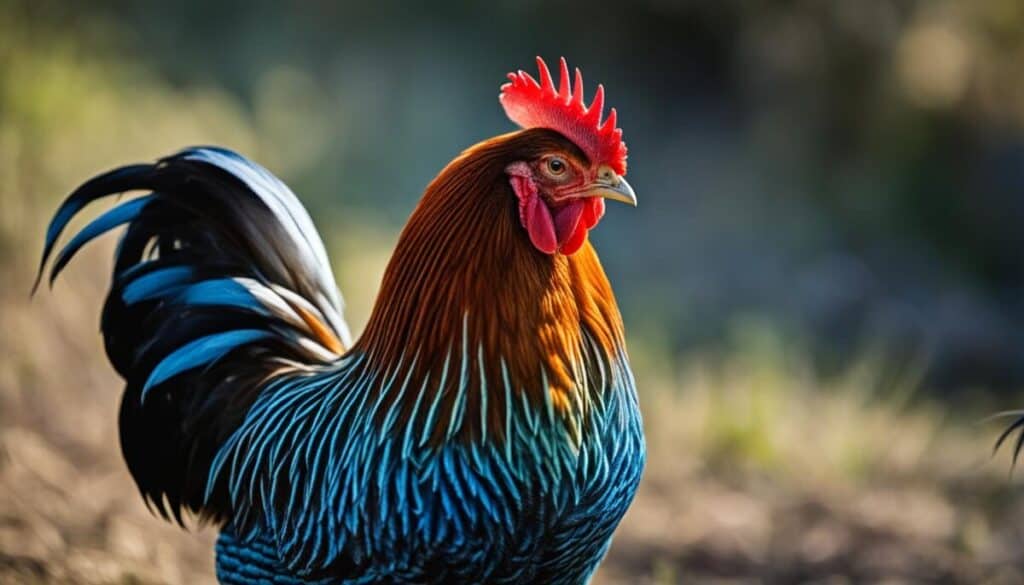
Greetings, chicken enthusiasts! Today, I am excited to introduce you to the fascinating world of the Barbu de Grubbe Chicken Breed. If you are looking for something unique and rare in the poultry world, this breed is sure to capture your attention.
The Barbu de Grubbe is a small bantam chicken breed that originated in Belgium. It is a tail-less variant of the Barbu d’Anvers breed and is mainly kept for fancy and exhibition purposes. With its exquisite appearance and charming characteristics, it is no wonder that this breed has gained popularity among poultry breeders and enthusiasts.
This breed comes in various colors, including quail, lavender, black, mille fleur, and more. Its striking appearance coupled with its friendly and easily tameable nature make it a perfect choice for those seeking a rare and delightful addition to their flock. Whether you have limited space in an urban setting or a larger backyard, the Barbu de Grubbe can adapt and thrive.
Key Takeaways:
- The Barbu de Grubbe is a rare and unique chicken breed originating from Belgium.
- It is a tail-less variant of the Barbu d’Anvers breed and is primarily kept for exhibition purposes.
- Available in various colors, the Barbu de Grubbe is known for its striking appearance and friendly nature.
- This breed is suitable for small spaces and urban settings.
- Conservation efforts are crucial to preserve the genetic diversity of this rare and charming heritage breed.
History and Origin
In the early 20th century, the Barbu de Grubbe breed was developed by Robert Pauwels in Belgium. Originating as a tail-less variant of the Barbu d’Anvers, one of the oldest bantam breeds, the Barbu de Grubbe quickly gained popularity for its unique characteristics. This charming breed made its way to the United Kingdom in 1911 and later became recognized in the Netherlands and Germany as well. In 1949, the Barbu de Grubbe was added to the American Poultry Association’s Standard of Perfection, solidifying its place in the poultry world.
| Year | Event |
|---|---|
| 20th century | Robert Pauwels develops the Barbu de Grubbe breed in Belgium |
| 1911 | The breed makes its way to the United Kingdom |
| 1949 | Added to the American Poultry Association’s Standard of Perfection |
The Barbu de Grubbe breed has a fascinating history that traces back to its development in Belgium by Robert Pauwels. Its journey from Belgium to the UK and its eventual recognition in countries like the Netherlands and Germany highlights its appeal and significance in the poultry community.
Physical Characteristics
The Barbu de Grubbe is a small bantam breed known for its unique appearance. This tail-less chicken has a thick, short neck and a distinct beard, making it easily recognizable. One of the fascinating features of the Barbu de Grubbe is its variety of feather colors. This breed comes in charming shades such as quail, lavender, black, mille fleur, and more.
With its pert body and lower back covered with saddle feathers, the Barbu de Grubbe presents an elegant and attractive posture. Both males and females exhibit similar appearances, but they have slight differences in weight. Males typically weigh around 700 grams, while hens weigh approximately 600 grams.

Barbu de Grubbe Characteristics
| Characteristics | Description |
|---|---|
| Tail | None – tail-less |
| Neck | Thick and short |
| Beard | Prominent and distinct |
| Feather Colors | Variety of shades including quail, lavender, black, mille fleur, and more |
| Body | Pert and elegant |
| Weight (Male) | Around 700 grams |
| Weight (Female) | About 600 grams |
The Barbu de Grubbe’s physical characteristics, combined with its unique feather colors, contribute to its overall charm and desirability among fanciers and exhibitors.
Egg Production
When it comes to egg production, the Barbu de Grubbe breed may not be the most prolific layer. These charming chickens produce small creamy-white eggs, weighing about 35 grams each. Unlike some other breeds that can lay a large number of eggs throughout the year, the Barbu de Grubbe’s annual egg production rate is not specified, but it is likely to be lower in comparison.
However, it’s important to note that the Barbu de Grubbe is primarily valued for its ornamental and exhibition qualities rather than its egg-laying abilities. Breeders and enthusiasts are drawn to this breed for its unique appearance, friendly nature, and historical significance.
While these chickens may not be the top choice for those seeking high egg yields, they bring beauty and character to any flock. Their small eggs can still be enjoyed for cooking and baking purposes, adding a touch of charm and uniqueness to your culinary creations.
Comparative Egg Production
| Breed | Egg Production | Egg Size |
|---|---|---|
| Barbu de Grubbe | Low | Small (about 35g) |
| Golden Comet | High | Large (about 60g) |
| Leghorn | Very High | Extra Large (about 65g) |
This table provides a comparison of egg production and size between the Barbu de Grubbe and other commonly known breeds. As you can see, the Barbu de Grubbe falls into the low category for egg production, with small-sized eggs weighing about 35 grams.
If your main goal is to maximize egg production, other breeds like the Golden Comet or Leghorn may be more suitable options. However, if you’re captivated by the Barbu de Grubbe’s beauty, friendly nature, and ornamental qualities, its unique eggs can still be enjoyed as a delightful addition to your flock.
Unique Features
The Barbu de Grubbe is a truly remarkable breed known for its unique features that distinguish it from other bantam chickens. Notably, it is also referred to as the Rumpless Antwerp Belgian or the Rumpless D’Anvers, highlighting its distinctive characteristics.
Feathered Wonders
One of the most striking features of the Barbu de Grubbe is its complete absence of a tail and coccygeal bone. This “rumpless” trait is rare among chicken breeds and adds to the breed’s allure and intrigue. Instead of a tail, the lower back of the Barbu de Grubbe is adorned with beautiful saddle feathers, further enhancing its captivating appearance.
“The Barbu de Grubbe’s rumpless nature sets it apart from its bantam counterparts, making it a fascinating breed for poultry enthusiasts and admirers.”
This remarkable trait not only contributes to the breed’s aesthetic appeal but also showcases its genetic distinctiveness. The Rumpless Antwerp Belgian or Rumpless D’Anvers name truly embodies this extraordinary feature, reflecting the absence of a tail along with its connection to the Barbu d’Anvers lineage. It is through these distinctive elements that the Barbu de Grubbe exudes elegance and individuality.

Unmistakable Charm
The unique qualities of the Barbu de Grubbe breed spark curiosity and intrigue. Whether you are a poultry enthusiast, a backyard chicken keeper, or simply someone with an appreciation for the extraordinary, the rumpless nature of the Barbu de Grubbe is undeniably captivating. Its exceptional features make it a true gem among the world of bantam chickens.
Behavior and Temperament
The Barbu de Grubbe is known for its friendly and easily tamable nature. This breed is particularly sought after for its gentle disposition, making it an ideal choice for families and those with children. The Barbu de Grubbe is generally calm and does well in confined spaces, making it suitable for urban or backyard settings.
However, it’s important to note that during mating season, roosters may become more territorial and aggressive. This behavior can be managed with proper handling and socialization. It is advisable to monitor roosters closely during this time and ensure their safety as well as the safety of other chickens.
The hens of the Barbu de Grubbe breed are known to be good mothers and may exhibit broodiness. This characteristic can be advantageous for breeders looking to hatch eggs of other breeds. An attentive broody hen can successfully raise chicks, making the Barbu de Grubbe a valuable addition to a diverse flock.
Characteristics Summary:
| Trait | Description |
|---|---|
| Friendliness | The Barbu de Grubbe is known for its friendly nature, making it suitable for families and children. |
| Easily Tamable | These chickens are easily tamed and can be handled with ease. |
| Aggression | Roosters may exhibit aggressive behavior during mating season, requiring proper handling and monitoring. |
| Broodiness | The hens of this breed may exhibit broodiness and can be used for hatching eggs of other breeds. |
Conservation and Rarity
The Barbu de Grubbe is an exceptional chicken breed that is considered rare and endangered. Its unique genetic traits and historical significance make it a valuable breed that requires special attention and conservation efforts to ensure its preservation for future generations.
The Barbu de Grubbe’s rarity stems from its status as a tail-less variant of an old bantam breed, the Barbu d’Anvers. This distinguishing characteristic and its diverse feather colors contribute to its appeal and desirability among poultry enthusiasts and collectors.
To protect the Barbu de Grubbe from extinction, dedicated breeders and conservationists are working tirelessly to maintain its genetic diversity and safeguard its unique attributes. These conservation efforts involve the careful selection and breeding of individuals with the desired traits, while avoiding inbreeding and maintaining a healthy population.
“Preserving the Barbu de Grubbe is crucial for the heritage and diversity of our poultry breeds. We must take action to safeguard this exceptional breed and educate others about its historical and cultural significance,” says Jane Johnson, a renowned poultry breeder and conservationist.
Conservation initiatives focus on raising awareness about the breed’s endangered status, promoting responsible breeding practices, and encouraging the establishment of dedicated breeding programs. The goal is to ensure that the Barbu de Grubbe continues to thrive and contribute to the rich tapestry of poultry breeds.

Conservation Strategies for the Barbu de Grubbe:
- Collaborating with international poultry organizations to exchange breeding stock and maintain genetic diversity.
- Documenting and recording the breed’s history, characteristics, and unique qualities to create comprehensive breed standards and guidelines.
- Engaging in public outreach and education through workshops, seminars, and online platforms to encourage awareness and appreciation for the breed.
- Supporting legislation and policies that protect and preserve rare and endangered poultry breeds, including the Barbu de Grubbe.
By actively participating in these conservation efforts, breeders, enthusiasts, and poultry lovers can help secure the future of the Barbu de Grubbe for generations to come. Preserving this extraordinary breed is not only an essential task but also a testament to the beauty and diversity of the poultry world.
Suitable for Small Spaces
The Barbu de Grubbe is a breed of chicken that is highly suitable for small spaces and urban chicken keeping. Its compact size and adaptable nature make it a popular choice for backyard enthusiasts with limited space.
This breed is known for its hardiness and ability to withstand different climates and conditions. Whether you live in a hot or cold climate, the Barbu de Grubbe can thrive and adapt to its surroundings.
Urban chicken keeping has gained popularity in recent years, as more people embrace sustainable and self-sufficient lifestyles. Keeping chickens in urban areas provides a source of fresh eggs and a chance to connect with nature, even in a limited space.
The friendly and docile nature of the Barbu de Grubbe makes it a perfect breed for families and individuals looking to venture into urban chicken keeping. They are great with children and can be easily tamed and handled.
With their relatively small size, Barbu de Grubbe chickens require less space compared to larger breeds. A small backyard or even a rooftop garden can provide ample space for a few of these chickens to roam and forage.
“The Barbu de Grubbe is a fantastic breed for urban chicken keeping. I live in a city apartment with limited outdoor space, but they fit right in. They have adapted well to the environment and are a joy to have around.” – Sarah, urban chicken keeper
Benefits of Urban Chicken Keeping with Barbu de Grubbe
- Fresh Eggs: Urban chicken keeping allows you to have a regular supply of fresh eggs right at your doorstep. The Barbu de Grubbe produces small but delicious eggs, perfect for your daily needs.
- Connection with Nature: Even in the heart of the city, keeping chickens brings a sense of nature and tranquility. Watching them scratch the ground and interact with each other can be a therapeutic experience.
- Sustainable Living: By keeping chickens in an urban environment, you are actively participating in sustainable living practices. Chickens help reduce food waste by eating kitchen scraps, and their manure can be used to fertilize plants.
- Education and Entertainment: Urban chicken keeping provides an opportunity for education, especially for children. They can learn about the life cycle of chickens and develop a greater appreciation for where their food comes from.
Overall, the Barbu de Grubbe breed is a perfect choice for urban chicken keeping due to its hardy and adaptable nature. It brings the joys of raising chickens even to those with limited space and offers numerous benefits, including fresh eggs, connection with nature, sustainable living, and educational opportunities.
Barbu de Grubbe Breed Clubs
The Barbu de Grubbe breed has specific breed clubs dedicated to its preservation and promotion. In the UK, there is the British Belgium Bantam Club, and in Australia, there is the Belgium Bantam Club of Australia. These clubs provide resources and support for breeders and enthusiasts.
British Belgium Bantam Club
The British Belgium Bantam Club is a community of dedicated chicken breeders and enthusiasts in the UK. This club focuses on preserving and promoting the Barbu de Grubbe breed, as well as other related Belgian bantam breeds. Members of the British Belgium Bantam Club have access to valuable resources, including breeding guidelines, exhibition information, and the opportunity to connect with fellow breeders. Whether you are a beginner or an experienced breeder, joining this club can provide you with the knowledge and support needed to enhance your understanding and appreciation of the Barbu de Grubbe breed.
Belgium Bantam Club of Australia
The Belgium Bantam Club of Australia is a passionate community of chicken enthusiasts dedicated to promoting and preserving Belgian bantam breeds, including the Barbu de Grubbe. This club provides a platform for breeders and enthusiasts across Australia to come together, share their experiences, and learn from one another. Members of the Belgium Bantam Club of Australia have the opportunity to participate in exhibitions, access educational resources, and receive support from experienced breeders. Whether you are looking to learn more about the Barbu de Grubbe or actively breed and exhibit these beautiful chickens, joining the Belgium Bantam Club of Australia can provide you with a wealth of knowledge and connections within the chicken-rearing community.
| Club Name | Location | Focus |
|---|---|---|
| British Belgium Bantam Club | United Kingdom | Preservation and promotion of Barbu de Grubbe breed and other Belgian bantams |
| Belgium Bantam Club of Australia | Australia | Preservation and promotion of Barbu de Grubbe breed and other Belgian bantams |
I’ve included some quick information about the British Belgium Bantam Club and the Belgium Bantam Club of Australia. These breed clubs are valuable resources for breeders and enthusiasts who are interested in the Barbu de Grubbe breed, as well as other Belgian bantam breeds. Whether you’re looking for breeding guidelines, exhibition opportunities, or connections within the chicken-rearing community, these clubs can provide you with the support and information you need.
Other Rare and Exotic Chicken Breeds
The Barbu de Grubbe is just one of many rare and exotic chicken breeds available. If you’re a poultry enthusiast looking to add some unique and fascinating breeds to your flock, there are plenty of options to explore.
One such breed is the Ayam Cemani, known for its all-black appearance. This Indonesian breed is prized for its jet-black plumage, skin, and even internal organs.
Another intriguing breed is the Indio Gigante, which holds the title of the world’s tallest chicken breed. Originally from Brazil, these birds can reach impressive heights, making them a real spectacle in any flock.
For those looking for something eye-catching, the Frizzle chicken breed might be the perfect choice. These birds have unique feathers that curl outward, giving them a stylish and captivating appearance.
“The world of rare and exotic chicken breeds is filled with surprises and wonders. Each breed has its own distinct characteristics and charm, making them a joy to raise and observe.” – Chicken Breed Expert
If you’re interested in a breed with a fascinating history, consider the Phoenix chicken. This breed originates from Germany and is known for its long and beautifully flowing tail feathers, which can reach impressive lengths.
These are just a few examples of the rare and exotic chicken breeds that exist. From breeds with unique appearance to those with intriguing behaviors, exploring the world of rare chickens can be a rewarding experience for any poultry enthusiast.

Rare and Exotic Chicken Breeds Comparison
| Breed | Origin | Main Features |
|---|---|---|
| Ayam Cemani | Indonesia | All-black appearance, including plumage, skin, and organs |
| Indio Gigante | Brazil | The world’s tallest chicken breed |
| Frizzle | Unknown, but popular worldwide | Feathers that curl outward, creating a unique and stylish look |
| Phoenix | Germany | Long and flowing tail feathers |
The Future of the Barbu de Grubbe
The future of the Barbu de Grubbe breed relies on the dedication of breeders and enthusiasts to its conservation. By prioritizing careful breeding and preservation efforts, we can ensure that this rare and charming breed continues to delight future generations.
Conservation initiatives play a crucial role in safeguarding the Barbu de Grubbe’s genetic diversity and unique characteristics. Supporting these efforts not only helps preserve the breed, but also promotes the value of heritage chicken breeds as a whole.
“Preserving rare and endangered chicken breeds is essential for maintaining biodiversity in poultry populations. The Barbu de Grubbe embodies the historical significance and beauty of heritage breeds, making it a valuable asset that must be protected.” – Chicken Preservation Society
Through targeted conservation programs, education, and advocacy, we can ensure the long-term survival of the Barbu de Grubbe. By raising awareness about the breed’s unique qualities and advocating for its protection, we can inspire others to join in the effort to preserve this treasured breed.
Conservation Efforts
Several organizations around the world are actively involved in the conservation of rare and endangered chicken breeds. These organizations work tirelessly to document and preserve the genetic diversity of these breeds, including the Barbu de Grubbe.
| Organization | Location | Website |
|---|---|---|
| Barbu de Grubbe Conservation Society | Belgium | www.barbudegrubbeconservation.org |
| Heritage Chicken Association | United States | www.heritagechickenassociation.org |
| International Rare Poultry Society | Global | www.rarepoultrysociety.org |
Joining these organizations, volunteering your time, or contributing to their cause can make a significant impact in the conservation of the Barbu de Grubbe and other endangered chicken breeds. Together, we can ensure the continued survival and enjoyment of these remarkable birds.
Conclusion
The Barbu de Grubbe Chicken Breed is a truly unique and captivating poultry breed that has captured the hearts of fancy and exhibition enthusiasts. With its tail-less appearance and a variety of stunning feather colors, it stands out among other heritage chicken breeds. While it may not be the most prolific layer, its friendly nature and adaptability make it an excellent choice for those looking to keep chickens in small spaces or urban settings.
By supporting conservation efforts, we can ensure the preservation of this rare and invaluable breed for future generations to appreciate and adore. The Barbu de Grubbe holds a significant place in the heritage chicken breed community, and its conservation is vital to protect its rich history and unique characteristics.
Whether you are a poultry enthusiast, an avid farmer, or simply intrigued by the world of heritage chicken breeds, the Barbu de Grubbe is a breed worth learning about and considering. Its charm, adaptability, and fascinating attributes make it a delightful addition to any backyard or exhibition flock.