

As a chicken owner, I’m always on the lookout for nutritious foods to include in my flock’s diet. Italian parsley is one herb that has caught my attention. Not only is it flavorful and versatile in cooking, but it also offers numerous health benefits for chickens. If you’re wondering whether chickens can eat Italian parsley, the answer is a resounding yes! Let’s explore why Italian parsley is a valuable addition to a chicken’s diet.
Key Takeaways:
- Italian parsley is safe and beneficial for chickens to eat
- It is rich in essential vitamins and minerals
- Parsley promotes a healthy circulatory system in chickens
- Chickens can easily incorporate parsley into their diet
- Italian parsley is also beneficial for companion planting in the garden
The Nutritional Benefits of Italian Parsley for Chickens
Italian parsley offers a range of nutritional benefits that can greatly contribute to the overall health and well-being of chickens. Packed with essential vitamins and minerals, this herb serves as a valuable addition to a chicken’s diet, promoting optimal chicken health and vitality.
Vitamins for Chicken Health
Italian parsley is rich in various vitamins that are vital for chickens. It contains Vitamin C, which boosts the immune system and helps chickens fight off diseases and infections. Vitamin B12 supports the development of a healthy nervous system and aids in red blood cell production, ensuring proper circulation. Vitamin K plays a crucial role in blood clotting, preventing excessive bleeding. Lastly, Vitamin A contributes to healthy skin, eyes, and feathers, enhancing the overall appearance of chickens.
Minerals for Egg Quality and Bone Health
In addition to vitamins, Italian parsley contains important minerals that contribute to egg quality and bone health in chickens. Iron is essential for transporting oxygen throughout the body and plays a vital role in egg production. Calcium, on the other hand, is necessary for strong bones and eggshell development, ensuring that chickens remain strong and healthy. By incorporating Italian parsley into their diet, chickens can benefit from these essential minerals, promoting overall well-being.
Additional Health Benefits
Italian parsley also offers additional health benefits to chickens, thanks to the presence of essential oils, such as myristicin and eugenol. These oils have antimicrobial properties that can strengthen the immune system and protect chickens from bacterial and viral infections. They also aid in improving digestion, promoting a healthy gut and efficient nutrient absorption. With these added health benefits, Italian parsley serves as a natural and nutritious supplement for chickens.
In conclusion, Italian parsley provides an array of nutritional benefits for chickens, including essential vitamins, minerals, and health-enhancing properties. By incorporating this herb into their diet, chicken owners can support the overall health and well-being of their flock, ensuring that they thrive and flourish.
Incorporating Italian Parsley into a Chicken’s Diet
Introducing Italian parsley into a chicken’s diet can provide a range of benefits for their health and well-being. There are various ways to incorporate this nutritious herb into their daily meals and snacks.
Adding Fresh Parsley to Their Regular Feed
One simple method is to mix finely chopped Italian parsley into their regular layer feed. The parsley blends seamlessly with the feed, and chickens won’t even notice the addition. This allows them to receive the nutritional benefits of parsley without any fuss or resistance.
Leaving a Pot of Parsley for the Chickens to Peck At
Another option is to leave a pot of fresh parsley in the chicken run or coop. This allows the chickens to peck at the leaves as they please. Not only does this offer them a natural and engaging activity, but it also provides them with beneficial dietary elements from the parsley.
Scattering Parsley Around the Coop
For a more interactive approach, scatter fresh parsley leaves around the coop. This encourages chickens to forage and search for their food, mimicking their natural behaviors. It keeps them mentally stimulated while incorporating Italian parsley into their diet.
It’s important to remember that while Italian parsley is a healthy addition to a chicken’s diet, treats should be given in moderation. The balance of their diet should still consist of complete and balanced chicken feed to ensure they receive all the necessary nutrients.
Consulting a veterinarian or poultry nutritionist can provide additional guidance on the appropriate amount of parsley to include in a chicken’s diet based on their specific needs and circumstances.
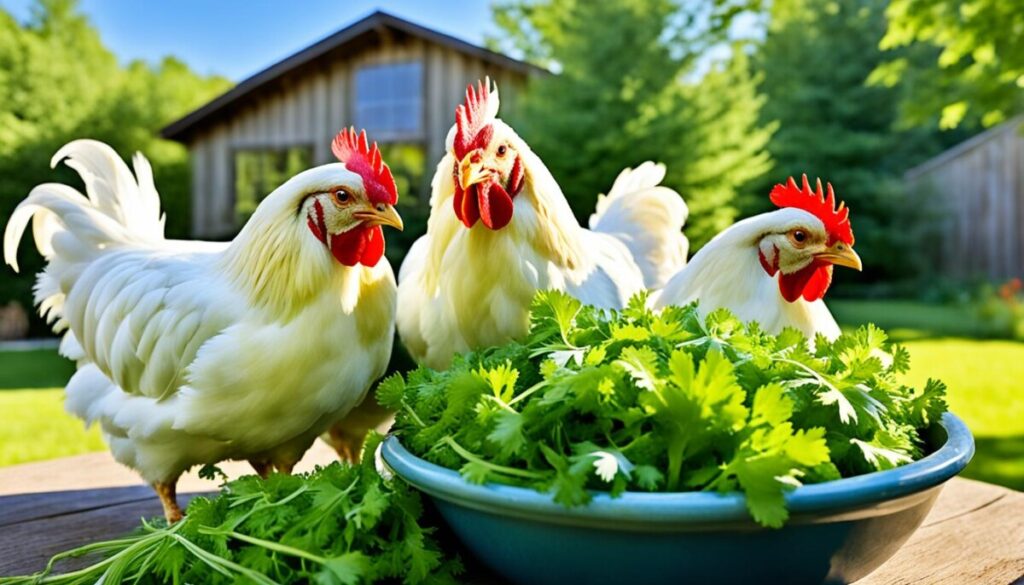
By incorporating Italian parsley into a chicken’s diet, you can enhance their nutrition and support their overall health. Whether added to their feed, left for them to peck at, or scattered around the coop, parsley offers a natural and beneficial option for your flock.
Companion Planting and Other Benefits of Italian Parsley
Italian parsley is not only beneficial for chickens but also serves as a great companion plant for many herbs and vegetables. Placing this versatile herb alongside other crops can provide numerous advantages for both the garden and the chickens’ nutrition.
The Benefits of Companion Planting
Companion planting involves strategically placing different plants together to enhance growth, deter pests, and promote overall plant health. Italian parsley plays a significant role in companion planting, benefiting various crops when planted nearby.
Carrots, for example, thrive when planted alongside Italian parsley. The parsley’s ability to repel carrot flies can help protect carrot crops from infestation. Additionally, the strong scent of parsley helps mask the scent of carrots, making them less attractive to pests.
Chives, corn, chili, tomatoes, onions, peas, and asparagus are other crops that benefit from the presence of Italian parsley. These plants can experience improved growth and reduced insect damage when planted in close proximity to parsley.
“Companion planting with Italian parsley can enhance the health and growth of various crops, providing a natural and beneficial environment for both plants and chickens.” – Stephanie, Backyard Gardener
Enhancing Fragrance and Aesthetics
Italian parsley also has aesthetic benefits, especially for gardeners who grow roses. Planting parsley at the base of rose bushes is believed to increase the fragrance of the flowers, enhancing the overall beauty of the garden. It creates a visually appealing contrast between the vibrant roses and the lush green leaves of the parsley.
Health Benefits for Humans
Aside from its positive impact on gardens and chickens, Italian parsley offers numerous health benefits for humans. It is known to boost the immune system and reduce inflammation, thanks to its rich vitamin and mineral content, including vitamins C and K.
Whether used as a garnish or incorporated into various dishes, parsley adds flavor and nutrition to meals. It can be used to make delicious parsley pesto, providing a fresh and nutritious alternative to traditional pesto sauces.
“By incorporating Italian parsley into companion planting and our meals, we can reap its benefits for both our gardens and our health.” – Stephanie, Backyard Gardener
Tips for Growing Italian Parsley
Growing Italian parsley in your backyard garden can be a rewarding experience. Whether you’re a seasoned gardener or a beginner, this herb is relatively easy to cultivate. Here are some tips to help you successfully grow Italian parsley:
- Choose the right location: Italian parsley thrives in a sunny spot with well-drained soil. Ensure that the area receives at least six hours of direct sunlight each day.
- Start from seeds or starter plants: Italian parsley can be grown from seeds or starter plants. If starting from seeds, sow them directly into the soil, about half an inch deep. Alternatively, you can purchase starter plants from a local nursery or garden center.
- Plant annually: To maintain a continuous supply of fresh parsley, it’s recommended to plant new seeds or starter plants each year. This ensures that you always have a fresh batch of parsley available.
- Harvest young leaves: Italian parsley is best harvested when the leaves are young and tender. As the plant matures, the leaves become tougher and more bitter. Harvest the outer leaves as needed, leaving the inner leaves to continue growing.
- Preserve for future use: If you have an abundance of parsley, you can preserve it for future use. Fresh parsley can be dried by hanging it upside down in a cool, dry place. Another option is to freeze the parsley by chopping it into small pieces and storing it in an airtight container or freezer bag.
- Water and fertilize adequately: Parsley requires regular watering to keep the soil moist. However, make sure not to overwater, as it can lead to root rot. Occasional fertilization with a balanced organic fertilizer will promote healthy growth.
By following these tips, you’ll have your very own supply of fresh Italian parsley right in your backyard. Enjoy the convenience of having this versatile herb readily available for culinary uses, while also benefiting from the nutritional value it provides to your poultry. Happy gardening!

Health Benefits of Italian Parsley for Humans
Italian parsley is not only a culinary garnish but also a nutritional powerhouse for humans. It offers a wide range of health benefits, making it an excellent addition to any diet.
Vitamins: Italian parsley is particularly rich in Vitamin C, which plays a crucial role in boosting the immune system and promoting healing. It also contains other essential vitamins, contributing to overall health and well-being.
Minerals: This versatile herb is packed with important minerals like iron and calcium, which are vital for bone health and overall physical functioning.
Anti-inflammatory properties: Italian parsley contains compounds that have anti-inflammatory properties, helping to reduce joint pain and muscle soreness. Regular consumption of parsley can provide relief for individuals with inflammatory conditions.
Italian parsley can be used in various culinary dishes, adding both flavor and nutrition. One popular example is parsley pesto, which combines the herb with olive oil, garlic, and other ingredients to create a delicious and healthy sauce. Its versatility makes it a valuable ingredient in salads, soups, stews, and more.
Parsley is not only a tasty addition to meals but also a valuable source of nutrients and health benefits. Incorporating Italian parsley into your diet can enhance your well-being and contribute to your overall health.
Health Benefits of Italian Parsley – Summary:
| Parsley Benefits | Description |
|---|---|
| Rich in Vitamins | Italian parsley is particularly rich in Vitamin C, which boosts the immune system and aids in healing. |
| Essential Minerals | Parsley contains important minerals like iron and calcium, which are crucial for bone health. |
| Anti-inflammatory Properties | The herb has compounds that exhibit anti-inflammatory effects, providing relief from joint pain and muscle soreness. |
| Versatile Culinary Ingredient | Italian parsley can be used in various dishes, adding both flavor and nutrition. |
Conclusion
In conclusion, Italian parsley is a safe and beneficial addition to a chicken’s diet. Its rich content of essential vitamins and minerals, including Vitamin C, B12, K, and A, contributes to a healthy circulatory system and enhances overall chicken health. Moreover, the immune-boosting properties of Italian parsley can help chickens ward off common illnesses.
Feeding chickens Italian parsley is easy and can be done by incorporating it into their regular feed or allowing them to peck at fresh leaves. This not only provides them with added nutrients but also satisfies their natural foraging instincts. Additionally, Italian parsley can be planted alongside herbs and vegetables in the garden, benefiting both chickens and crops with its companion planting properties.
By including Italian parsley in a chicken’s diet, chicken owners can ensure that their flock receives the necessary nutrition for optimal health and well-being. Whether you have backyard chickens or are a poultry enthusiast, consider adding Italian parsley to their diet to provide them with the many nutritional benefits it offers.