
When it comes to feeding chickens, it’s important to provide them with a balanced and nutritious diet. Protein is an essential component of their diet, especially during the molting season when their bodies are working hard to replace old feathers with new ones. While chickens naturally get their protein from sources like bugs, grasses, and commercial layer feed, some owners wonder if cat food can be a suitable option. In this article, I will explore whether chickens can eat cat food and provide you with some safe alternatives to consider.
Key Takeaways:
- Chickens can benefit from extra protein during molting, but cat food is not recommended as it is formulated for cats and may contain unnecessary additives.
- There are other healthy sources of protein that you can offer to chickens, such as cooked eggs, poultry, meat scraps, mealworms, nuts and seeds, and sprouts.
- Feeding chickens a balanced diet that includes a mix of protein, grains, fruits, and vegetables is essential for their overall health and egg production.
- Avoid feeding chickens toxic foods like green potato skins, chocolate, caffeine, raw beans, avocados, alcohol, and moldy or spoiled food.
- Providing a variety of safe and nutritious foods keeps chickens happy, satisfied, and supports their well-being.
Chicken Diet and Nutrition
Chickens require a balanced diet to maintain their health and well-being. A key component of their diet is a good-quality commercial layer feed. This feed provides essential nutrients and vitamins necessary for proper growth and egg production. Chicken nutrition plays a crucial role in ensuring optimal health and productivity.
In addition to layer feed, chickens can benefit from natural sources of protein such as bugs, worms, and grasses. These safe foods for chickens supplement their diet and provide the necessary nutrients to support their overall health. During the molting season, some chicken owners suggest switching to a higher protein grower feed or game bird feed. Another option is feeding chick feed, which is higher in protein than layer feed and can be given during the molting season.
The Importance of a Balanced Diet
A balanced diet is essential for chickens to thrive. It ensures that they receive all the necessary nutrients, vitamins, and minerals to support their growth, immunity, and reproductive functions. A well-balanced diet contributes to healthy egg production and shell quality.
Feeding too much protein-rich food can lead to overweight chickens and poor egg production. Additionally, substituting their regular feed entirely with high protein sources can disrupt the balance of nutrients in their diet. It is important to limit treats to around 10% of their total diet to avoid excessive protein intake.
Chicken Diet Tips
Here are some tips for feeding chickens:
- Provide a good-quality commercial layer feed as the base of their diet.
- Supplement their diet with natural sources of protein, like bugs and grasses.
- Consider switching to a higher protein grower feed or game bird feed during molting season.
- Offer chick feed, higher in protein than layer feed, during molting.
- Limit treats to around 10% of their total diet.
- Ensure fresh water is always available.
By following these guidelines, you can ensure that your chickens receive the proper balance of nutrients, support their growth, and maintain their overall health and productivity.
| Nutrient | Source |
|---|---|
| Protein | Commercial layer feed, bugs, worms |
| Carbohydrates | Grains in the layer feed, vegetables, fruits |
| Vitamins and Minerals | Commercial layer feed, vegetables, fruits |
Providing a well-balanced diet is crucial for the health and productivity of chickens. By offering a combination of commercial feed and natural protein sources, you can ensure that your chickens receive all the necessary nutrients they need to thrive.
Protein Sources for Chickens
When it comes to providing a balanced diet for chickens, incorporating various protein sources is crucial to ensure their nutritional needs are met. Chickens require protein to support their growth, feather development, and overall health. Fortunately, there are plenty of healthy protein options that can be offered to chickens.
1. Cooked Eggs

One of the most popular and readily available protein sources for chickens is cooked eggs. Eggs are not only highly nutritious but also a favorite treat among chickens. You can simply hard-boil the eggs, let them cool, and then offer them to your chickens. This protein-packed snack will be eagerly devoured by your feathered friends.
2. Poultry
Another excellent source of protein for chickens is poultry. Cooked chicken or turkey meat can be offered as a special treat or mixed into their regular feed. It’s important to remember not to include any seasoning or spices that may be harmful to chickens. Plain, unseasoned poultry is the way to go.
3. Meat Scraps and Bones
If you have leftover meat scraps or bones from beef, lamb, or pork, don’t let them go to waste! Chickens can benefit from the protein content in these scraps. Make sure the meat scraps are thoroughly cooked and remove any bones that could pose a choking hazard. Remember, moderation is key when it comes to feeding meat scraps to chickens.
4. Fish, Shrimp, and Lobster
Believe it or not, chickens can also enjoy seafood! Raw or cooked fish, shrimp, and even lobster can be offered to provide a different protein source. As with any food, ensure that seafood remains fresh and free from any harmful additives or seasonings.
5. Mealworms and Grubs
Dried mealworms or grubs are another excellent option for chickens. These tasty treats are rich in protein and can be easily purchased from pet stores or online suppliers.
6. Seeds, Nuts, and Legumes
Incorporating seeds, nuts, and legumes into your chickens’ diet is a great way to boost their protein intake. Pumpkin seeds, sunflower seeds, chopped walnuts, and peanuts are all nutritious options that can be included in their feed or offered as treats. Sprouted beans and legumes are also a fantastic source of protein for chickens.
By providing a variety of protein sources, you can ensure that your chickens receive the necessary nutrients to thrive. Keep in mind that protein should be part of a balanced diet, and it’s essential to offer a mix of other foods like grains, vegetables, and fruits to meet their dietary requirements.
| Protein Sources for Chickens | Nutritional Content |
|---|---|
| Cooked Eggs | High in protein, vitamins, and minerals |
| Poultry | Rich in protein, low in fat |
| Meat Scraps and Bones | Good source of protein, minerals, and collagen |
| Fish, Shrimp, and Lobster | High in protein and omega-3 fatty acids |
| Mealworms and Grubs | Protein-rich, great for snacks and treats |
| Seeds, Nuts, and Legumes | Provides protein, healthy fats, and fiber |
Why Cat Food is Not Recommended for Chickens
Feeding chickens a proper and balanced diet is essential for their overall health and egg production. While chickens are omnivorous and can eat a variety of foods, cat food is not recommended as a regular part of their diet. Here’s why:
Cat food is formulated specifically for cats, not chickens.
It contains ingredients and additives that chickens do not necessarily need and may not be beneficial for their health. Chickens have different dietary requirements compared to cats, and their nutritional needs must be met with the right combination of foods.
Cat food lacks essential vitamins and nutrients that chickens require, such as calcium.
Chickens need adequate amounts of calcium for proper bone development and eggshell formation. While cat food may be rich in protein, it often falls short when it comes to providing the necessary vitamins and minerals that chickens need to thrive.
To ensure that chickens receive the proper nutrition and stay healthy, it is important to feed them a good-quality commercial layer feed that is specifically formulated for chickens. Layer feed contains the right balance of proteins, carbohydrates, vitamins, and minerals to support chicken health and egg production.
In addition to layer feed, it is also beneficial to supplement their diet with natural sources of protein, such as bugs, worms, and grasses. These provide additional nutrients and help chickens maintain a balanced diet.
By providing a balanced diet and avoiding cat food as a regular part of their feeding regimen, you can ensure that your chickens receive the necessary nutrition they need to thrive.
The Difference Between Cat Food and Chicken Feed
When it comes to feeding chickens, understanding the difference between cat food and chicken feed is crucial for their overall health and nutrition. While both options provide a source of sustenance, their nutritional content varies significantly.
Cat food is higher in protein and lower in carbohydrates compared to chicken feed. It is formulated to meet the unique dietary needs of cats, offering a high protein content which supports their carnivorous nature. With a higher fat content, cat food provides a dense source of energy for feline metabolism.
On the other hand, chicken feed is specifically designed to meet the dietary requirements of chickens. It has a higher percentage of grains and other carbohydrates to provide the necessary energy for daily activities and egg production.
Moreover, chicken feed contains a balanced mix of vitamins, minerals, and other nutrients essential for chicken health and egg production. These vital nutrients contribute to the overall vitality of chickens and the quality of the eggs they produce.
The Nutritional Comparison Between Cat Food and Chicken Feed
| Category | Cat Food | Chicken Feed |
|---|---|---|
| Protein Content | Higher | Lower |
| Carbohydrate Content | Lower | Higher |
| Fat Content | Higher | Lower |
| Nutritional Balance | Limited | Comprehensive |
As the table illustrates, cat food is primarily focused on providing a protein-rich diet, while chicken feed is formulated to offer a well-rounded nutritional profile. While cats thrive on a high-protein and high-fat diet due to their unique physiology, chickens require a balanced nutritional intake to maintain optimal health and egg production.
It is important to note that feeding chickens cat food may not provide them with all the necessary nutrients for their well-being. Chicken feed, with its balanced composition, supports the overall health and vitality of chickens, ensuring their nutritional needs are met.

By understanding the fundamental differences between cat food and chicken feed, you can make informed choices regarding the diet of your chickens. Providing them with a specialized chicken feed that meets their nutritional requirements is the best way to ensure their well-being and productivity.
Feeding Cat Food in Moderation
While it is possible for chickens to consume cat food, it is important to do so in moderation. Cat food can serve as a decent source of protein for chickens, but it lacks the essential nutrients, such as calcium, that are necessary for their overall health. To ensure that chickens receive a well-rounded diet, it is crucial to supplement their cat food intake with other foods that provide the required nutrition. Including fruits, vegetables, grains, and treats like mealworms in their diet can help meet their nutritional needs.
Feeding cat food to chickens should be treated as an occasional indulgence rather than a primary dietary component. Incorporating a variety of other food options into their feeding routine ensures that chickens receive the necessary vitamins, minerals, and other essential nutrients. By offering a balanced and diverse diet, chicken owners can optimize their flock’s health and well-being.
The Importance of Balanced Nutrition for Chickens
Providing chickens with a balanced diet is crucial for their growth, development, and overall health. A balanced nutrition plan helps to fortify their immune system, supports optimal egg production, and ensures stronger eggshells. Additionally, a well-rounded diet prevents issues such as obesity, which can lead to various health problems.
I highly recommend offering a combination of protein, grains, fruits, and vegetables to meet chickens’ complex dietary requirements.
The Risks of Overfeeding Protein
Chickens naturally require protein for essential bodily functions, but overdoing it can have adverse effects on their health. Providing an abundance of protein-rich foods, including cat food, can result in overweight chickens and diminished egg production. To maintain a healthy balance, it is best to adhere to a varied diet that caters to the chickens’ overall nutritional needs.
Foods to Supplement a Chicken’s Diet
When augmenting a chicken’s diet, there are numerous safe and nutrient-packed options to consider:
- Fruits: Offer them treats like berries, melons, and apples (without seeds) for added vitamins and minerals.
- Vegetables: Provide leafy greens and carrots to enhance their diet with valuable nutrients.
- Grains: Include cooked grains for added energy and a healthy source of carbohydrates.
- Protein sources: Consider other protein-rich treats like mealworms or insect-based feeds.
Creating a Balanced Diet for Chickens
It is crucial to strike a balance in a chicken’s diet by combining various foods in appropriate proportions. Below is a sample diet plan:
| Food Type | Recommended Amount |
|---|---|
| Commercial Layer Feed | 75-90% of daily intake |
| Fruits and Vegetables | 10-15% of daily intake |
| Treats (Mealworms, Grains, etc.) | 5-10% of daily intake |
Providing fresh water at all times is essential for chickens and supports their overall health.
By adopting a well-planned feeding approach, you can ensure your chickens’ overall health and satisfaction. Remember to prioritize a balanced diet tailored to their unique needs, incorporating a variety of safe and nutritious foods. By doing so, you are fostering a vibrant and thriving flock.
Can Chickens Have Too Much Protein
Feeding chickens a balanced diet is crucial for their overall health and well-being. While protein is an essential component of their diet, providing too much can have negative effects on their health. Chicken Feeding Guide and knowledge of Safe Foods for Chickens can help ensure that chickens receive the right amount of protein along with other necessary nutrients.
During the molting season, chickens may benefit from an extra protein boost. Protein aids in feather growth, making the molting process smoother. However, it is important to note that maintaining a high protein diet throughout the year is not recommended. Overfeeding protein-rich foods like cat food can lead to issues such as overweight chickens and poor egg production.

To avoid these problems, it’s crucial to provide a balanced diet that includes a mix of protein, grains, fruits, and vegetables. This ensures that chickens receive all the necessary nutrients to support their overall health and egg production. Incorporating a variety of foods into their diet helps meet their complex dietary requirements and prevents them from consuming excessive amounts of protein.
By following a Chicken Feeding Guide and offering safe and nutritious foods, you can keep your chickens healthy, happy, and productive. Remember to provide fresh water at all times and avoid feeding them foods that are harmful or toxic.
Other Foods to Avoid Feeding Chickens
While it’s true that chickens can enjoy a wide variety of foods, there are some items that should be kept out of their diet to ensure their safety and well-being. To maintain a healthy and thriving flock, it’s crucial to be aware of the following foods to avoid:
- Green Potato Skins: The green parts of potatoes contain a toxic substance called solanine, which can be harmful to chickens if ingested in large quantities.
- Tomatoes in Excess: While tomatoes themselves are not harmful to chickens, excessive consumption can lead to digestive issues. Moderation is key.
- Chocolate and Caffeine: Chocolate and caffeine contain theobromine, a compound that can be toxic to chickens. Keep all chocolate and caffeinated products out of their reach.
- Onions in Excess: Onions contain a compound called thiosulphate, which can damage red blood cells in chickens. Avoid feeding them excessive amounts of onions.
- Raw or Dry Beans: Uncooked or dry beans contain antinutrients that are harmful to chickens. Ensure beans are fully cooked before offering them as a treat.
- Avocados: Avocados contain a toxin called persin, which can be deadly to chickens. Avoid feeding them any part of the avocado.
- Alcohol: Alcohol is toxic to chickens and can lead to serious health issues, including organ damage. Do not give them any alcoholic beverages.
- Moldy or Spoiled Food: Moldy or spoiled food can contain harmful bacteria or toxins that may cause illness in chickens. Always provide fresh and safe food.
- Rhubarb Leaves: Rhubarb leaves contain oxalic acid, which can harm chickens if consumed in large amounts. Keep rhubarb plants out of their reach.
- Apple Seeds: Apple seeds contain small amounts of cyanide, which can be toxic to chickens if consumed in large quantities. Remove seeds before offering them apples.
- Uncooked Rice: Uncooked rice can expand in a chicken’s digestive system, causing blockages and digestive issues. Cooked rice is safe for consumption.
- Excessively Salty Foods: Too much salt can disrupt a chicken’s electrolyte balance and lead to dehydration. Avoid feeding them excessively salty foods.
- Toxic Plants: Certain plants, such as foxglove, oleander, and lily of the valley, contain toxins that can be harmful or fatal to chickens. Remove these plants from their environment.
By being cautious and avoiding these foods, you can ensure the health and well-being of your chickens, allowing them to thrive in their surroundings.
Foods That Chickens Can Eat
Chickens can enjoy a wide variety of foods that provide them with essential nutrition. By including these foods in their diet, you can ensure that your chickens stay healthy and happy.
Here are some safe and nutritious foods that chickens can eat:
- Sunflower seeds: Chickens love pecking at sunflower seeds, which are a great source of protein and healthy fats.
- Dog food (in moderation): While dog food can be given to chickens, it should only be fed in moderation as an occasional treat.
- Leafy greens: Greens like spinach, kale, and lettuce are rich in vitamins and minerals that support chicken health.
- Carrots: Carrots are a tasty and nutritious treat for chickens. They provide essential vitamins and antioxidants.
- Apples (without seeds): Apples make a delicious snack for chickens. Just make sure to remove the seeds, as they can be harmful.
- Berries: Strawberries, blueberries, raspberries, and blackberries are all safe for chickens to enjoy. These fruits are packed with antioxidants and vitamins.
- Melons: Watermelon and cantaloupe are hydrating treats for chickens. They provide vitamins A and C.
- Pumpkins: Chickens can eat cooked pumpkin, including the flesh and seeds. Pumpkins are rich in vitamins and fiber.
- Cooked grains: Rice, oats, and other cooked grains can be included in a chicken’s diet. They provide carbohydrates for energy.
- Seeds and nuts: Chickens can eat a variety of seeds and nuts, such as pumpkin seeds, sunflower seeds, and chopped walnuts. These foods are a good source of protein and healthy fats.
- Dairy products: Small amounts of dairy products like milk and yogurt can be given to chickens as treats. They provide calcium and protein.
- Cooked meat and fish: Leftover cooked meat and fish can be fed to chickens. Make sure to remove any bones and seasonings.
- Most chicken scraps: Chickens can eat scraps from cooked chicken dishes, such as chicken skin and meat. However, avoid giving them any bones.
Remember to introduce new foods gradually and observe how your chickens react to them. It’s important to provide a balanced diet that includes commercial feed along with these treats.
The Benefits of a Balanced Diet for Chickens
Feeding chickens a well-rounded diet offers several benefits:
- Overall health: A balanced diet promotes good health and strengthens the immune system of chickens.
- Egg production: Optimal nutrition ensures consistent egg production and improves the quality of eggs.
- Preventing obesity: A balanced diet helps maintain a healthy weight and prevents obesity in chickens.
- Well-being: Providing a variety of nutritious foods keeps chickens satisfied and content, promoting their overall well-being.
Incorporating a mix of safe and nutritious foods into their diet ensures that chickens receive the essential nutrients they need to thrive.
| Food | Nutritional Benefits |
|---|---|
| Sunflower seeds | High in protein and healthy fats |
| Leafy greens | Rich in vitamins and minerals |
| Carrots | Provide essential vitamins and antioxidants |
| Apples (without seeds) | Nutritious and delicious snack |
| Berries | Packed with antioxidants and vitamins |
| Melons | Hydrating and rich in vitamins A and C |
| Pumpkins | Rich in vitamins and fiber |
| Cooked grains | Provide carbohydrates for energy |
| Seeds and nuts | Source of protein and healthy fats |
| Dairy products | Calcium and protein |
| Cooked meat and fish | Leftover protein-rich foods |
| Most chicken scraps | Leftover chicken meat and skin |
By offering a balanced and varied diet, you can keep your chickens healthy, happy, and productive.
Benefits of a Balanced Diet for Chickens
Feeding chickens a balanced diet that includes a mix of protein, grains, fruits, and vegetables has several benefits. It helps to support their overall health and well-being, including their immune system and reproductive health. A balanced diet ensures that chickens receive all the necessary nutrients for optimal egg production and shell quality.
One of the main advantages of a balanced diet is its ability to prevent obesity and other health issues related to an imbalanced or excessive diet. By providing the right combination of nutrients, chickens are less likely to become overweight, which can lead to various health problems and decreased egg production.
Additionally, a balanced diet supports the immune system of chickens, making them less susceptible to diseases and infections. The combination of protein, grains, fruits, and vegetables provides essential vitamins, minerals, and antioxidants that help boost their immune response and overall vitality.
Another benefit of a balanced diet is its positive impact on egg production and shell quality. Chickens need a variety of nutrients, such as calcium, protein, and various vitamins, to lay healthy and strong eggs. Providing a balanced diet ensures that chickens have all the necessary resources to produce high-quality eggs with strong, intact shells.
| Benefits of a Balanced Diet for Chickens | Explanation |
|---|---|
| Promotes overall health and well-being | A balanced diet supports the immune system and reproductive health of chickens. |
| Prevents obesity and health issues | An imbalanced or excessive diet can lead to overweight chickens and poor egg production. |
| Boosts immune system | A balanced diet provides essential nutrients that support the immune response of chickens. |
| Improves egg production and shell quality | A combination of protein, grains, fruits, and vegetables ensures optimal egg production and strong eggshells. |
Providing a variety of foods in their diet also keeps chickens happy and satisfied. Chickens enjoy having different flavors and textures in their meals, just like humans do. Offering a diverse range of foods prevents boredom and helps stimulate their natural foraging instincts.
Tips for Feeding Chickens
When it comes to feeding chickens, it’s important to prioritize their specific dietary needs to ensure they stay healthy and happy. Here are some essential tips to guide you:
- Provide a good-quality commercial layer feed as the foundation of their diet. This feed is specially formulated to meet the nutritional requirements of laying hens, offering a balanced mix of protein, carbohydrates, vitamins, and minerals.
- Supplement their feed with natural protein sources like bugs, worms, and grasses. This allows chickens to engage in their natural foraging behavior and receive additional nutrients.
- Limit treats to around 10% of their total diet. While treats can be a fun addition to their meals, it’s important not to overdo them. Too many treats can lead to nutritional imbalances and health issues.
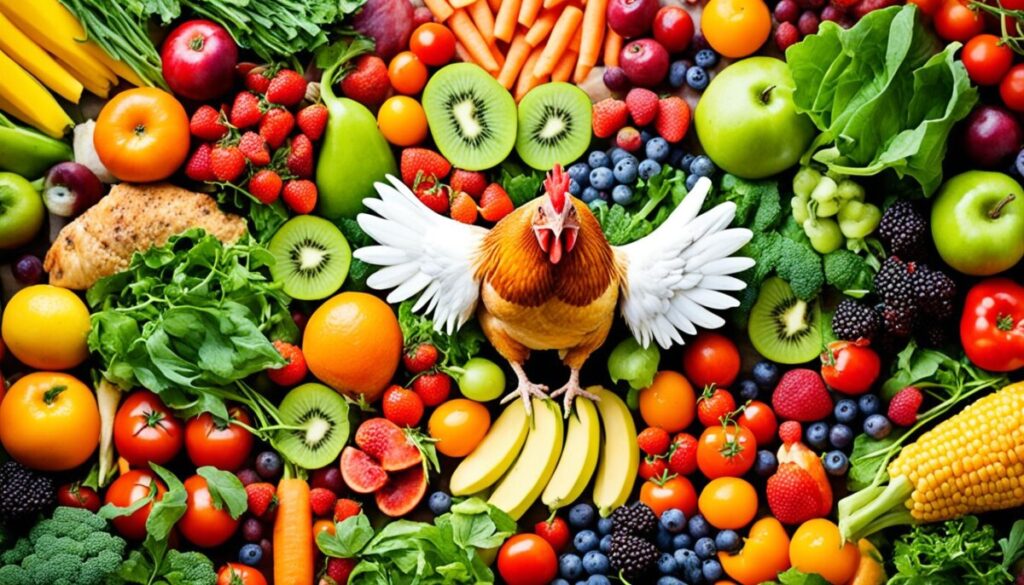
- Offer a variety of fruits and vegetables to provide essential vitamins, minerals, and fiber. Some safe options include leafy greens, carrots, apples (without seeds), berries, melons, and pumpkins.
- Include grains like corn, oats, and wheat in their diet. These grains serve as a valuable energy source and contribute to a well-rounded diet.
- Consider adding additional protein sources like cooked meat scraps and fish. These can be given as treats or mixed into their regular feed to enhance the protein content of their diet.
- Ensure fresh water is always available for chickens to drink. Hydration is crucial for their overall health and proper digestion.
- Avoid feeding them foods that are harmful or toxic. Some examples include chocolate, caffeine, onions, avocado, alcohol, and moldy or spoiled food. Additionally, steer clear of toxic plants that could pose a threat to their well-being.
By following these tips, you can provide your chickens with a nutritious and well-balanced diet that promotes their overall health and productivity. Remember to monitor their body condition and adjust their feeding regimen if necessary to maintain their optimal well-being.
Conclusion
While chickens can eat cat food, it is not recommended to make it a regular part of their diet. Cat food lacks certain essential nutrients that chickens need for their overall health and egg production. A balanced diet that includes a mix of protein, grains, fruits, and vegetables is crucial for providing chickens with the necessary nutrition.
Feeding chickens a variety of safe and nutritious foods helps to support their well-being and keeps them happy and healthy. It is important to offer a good-quality commercial layer feed as the base of their diet and supplement it with natural sources of protein like bugs and grasses. Limiting treats to around 10% of their total diet helps prevent overeating and maintains a balanced nutritional intake.
By providing a well-rounded diet and avoiding harmful or toxic foods, you can ensure that your chickens receive all the essential nutrients they need to thrive. Remember to always have fresh water available for your chickens and to monitor their health and egg production. With proper nutrition and care, your chickens will be healthy and productive members of your flock.