
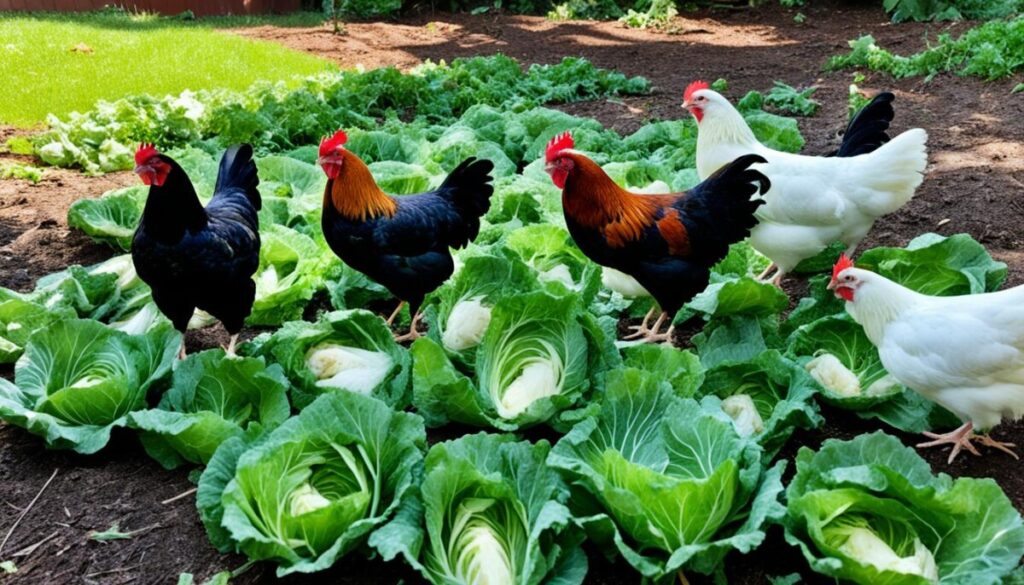
Welcome to our guide on feeding chickens cabbage. If you’re wondering whether chickens can eat cabbage, the answer is yes! Chickens are natural omnivores and can enjoy a variety of vegetables in their diet, including cabbage. In this article, I will provide you with all the information you need to know about feeding cabbage to chickens, including the benefits, considerations, and how to properly incorporate it into their diet. So let’s dive in!
Key Takeaways:
- Chickens can eat cabbage, including different varieties like red cabbage, green cabbage, Brussels sprouts, and napa cabbage.
- It’s important to feed cabbage to chickens in moderation due to its low nutritional value and the presence of goitrogens.
- Cabbage can provide vitamins, minerals, fiber, and vitamin K to chickens.
- Chickens can consume all parts of the cabbage plant, including the roots, stalks, core, and leaves.
- Before feeding cabbage to chickens, rinse it, remove any moldy spots, and consider cutting it into smaller pieces for easy consumption.
Can Chickens Eat Cabbage? Yes, but with caution!
Chickens can enjoy cabbage as a treat, but it’s important to feed it to them in moderation. While cabbage is safe for chickens to consume, it should not replace their main diet of commercially produced chicken feed. Too many treats, including cabbage, can disrupt their nutritional balance and lead to health issues.
Cabbage, along with vegetables like broccoli and cauliflower, contains goitrogens, which are compounds that can interfere with thyroid function in chickens. If offered in excessive amounts, goitrogens can potentially cause avian goiter, a condition characterized by weight loss, lethargy, and depression. It’s essential to monitor chickens when feeding them cruciferous vegetables like cabbage, especially if their feed contains soybeans, as soybeans also contain goitrogens.
The Importance of Moderation
While cabbage offers nutritional benefits, it’s crucial to remember that it should be given in moderation. Commercial chicken feed is specially formulated to provide all the necessary nutrients for optimal chicken health and egg production. Treats like cabbage should only supplement their diet and not comprise a significant portion of their daily intake.
By limiting cabbage treats to occasional offerings, you can ensure that your chickens receive a balanced diet while still enjoying the benefits of this leafy vegetable.
Observing Your Chickens’ Response
Every chicken is unique, and some may have sensitivities or digestive issues when consuming cabbage. It’s essential to introduce cabbage gradually and observe their response. If you notice any signs of digestive discomfort, such as gas or bloating, it may be necessary to limit or discontinue cabbage treats for those particular chickens.
Remember, the well-being and health of your chickens should always be a top priority. Pay attention to their individual needs and adjust their diet accordingly for optimal health and happiness.
Diversifying Their Diet
While cabbage can be a tasty and nutritious treat, it’s vital to provide your chickens with a varied diet that includes a range of vegetables, fruits, and grains. This diversity ensures they receive a wide spectrum of nutrients and helps prevent boredom. Consider rotating different treats and offering a variety of greens to keep your chickens stimulated and healthy.
Now that you know chickens can eat cabbage, it’s time to observe their enjoyment of this leafy green. Just remember, moderation is key, and always prioritize their well-being by offering a balanced and diverse diet.
The Benefits of Cabbage for Chickens
Despite its low nutritional value, cabbage can still provide some benefits to chickens. It is a good source of vitamins, minerals, and fiber. Cabbage is particularly high in vitamin K, which supports healthy egg production in hens. The outer leaves, stems, and cores of cabbage are also edible and can be added to the chickens’ diet. Including cabbage in their diet can contribute to their overall well-being and egg-laying abilities.
While cabbage may not be as nutrient-dense as other vegetables, it still offers some valuable nutrients. Vitamin K is essential for blood clotting, which is important to prevent excessive bleeding during egg laying. Additionally, fiber aids in healthy digestion, promoting nutrient absorption and optimal egg production.
When feeding cabbage to chickens, it is best to offer it in moderation as a treat or supplement to their regular diet. Chickens enjoy pecking at the leaves and stems, which can provide them with entertainment and mental stimulation. However, it is important to remember that cabbage should not replace their primary feed, as it may not provide all the necessary nutrients for their growth and well-being.
Adding Variety to Their Diet
Chickens, like humans, can benefit from a diverse diet. Cabbage can offer a refreshing change from their regular feed, providing them with a different taste and texture. By including cabbage in their diet, you can introduce new flavors and nutrients, keeping them engaged and satisfied.
“Cabbage can be a healthy addition to a chicken’s diet, providing them with vitamins, minerals, and fiber. While it should be fed in moderation, the inclusion of cabbage can support their overall health and egg production.”
Presentation and Preparation
When offering cabbage to chickens, it is essential to clean it thoroughly and remove any outer leaves that may be damaged or contaminated. Rinse the cabbage under running water and ensure there are no signs of pests or mold. Once clean, you can either serve the whole cabbage head or cut it into smaller pieces to make it more manageable for the chickens to eat.

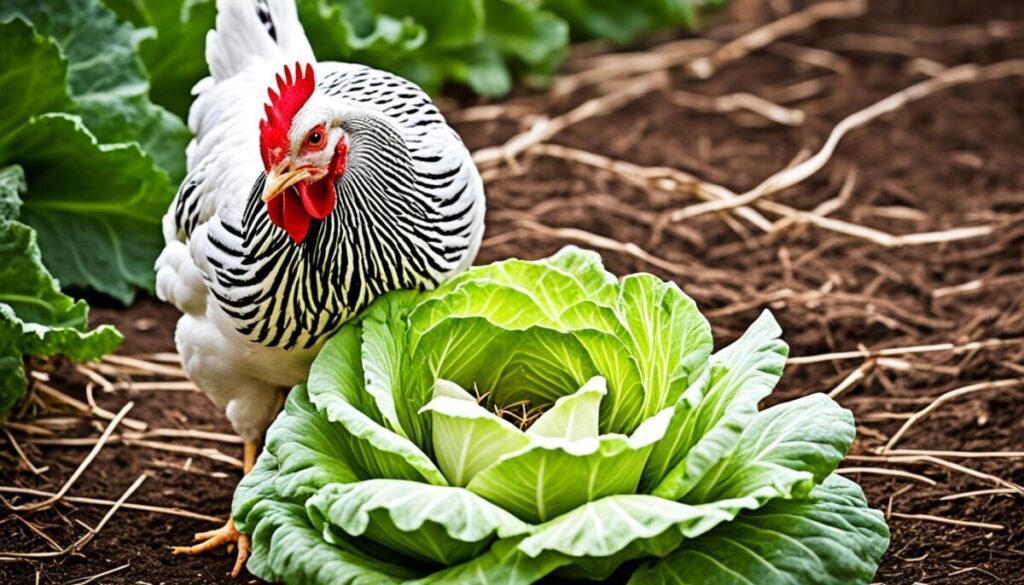
The image above showcases a fresh and enticing cabbage head, ready to be enjoyed by chickens. By incorporating cabbage into their diet, you can provide them with a healthy and nutritious treat while adding variety to their meals.
Diversifying Their Nutritional Intake
Cabbage is an excellent addition to a chicken’s diet if offered in moderation. While it may not be as nutrient-dense as their regular feed, it can still contribute to their overall well-being. The fiber in cabbage promotes healthy digestion, preventing digestive issues and supporting nutrient absorption. Additionally, the vitamin K in cabbage can enhance egg production and maintain healthy blood clotting.
Remember to monitor your chickens’ intake of cabbage and ensure it complements their balanced diet. By providing a varied and well-rounded diet, you can support their health, happiness, and egg-laying abilities.
What Parts of the Cabbage Plant Can Chickens Eat?
Chickens can enjoy all parts of the cabbage plant as part of their diet. This includes the roots, stalks, core, and leaves. When harvesting cabbage plants in your garden, you can provide chickens with either the leaves or the cores. Even if the entire cabbage head is infested with cabbage worms, chickens can safely consume it. However, it’s worth noting that the tough texture of cabbage leaves may make it challenging for chickens to peck at. To make it easier for them to consume, consider cutting the cabbage into small, chicken bite-sized pieces.
Feeding chickens cabbage is not only a treat for them, but it also adds variety to their diet. Just remember to moderate their intake to maintain a balanced diet and to prevent digestive issues.
How to Feed Cabbage to Chickens
When it comes to feeding cabbage to chickens, there are a few important steps to follow to ensure their safety and satisfaction. Let me guide you through the process:
- Rinse and inspect: Start by rinsing the cabbage thoroughly to remove any dirt or debris. Inspect it for freshness, and discard any moldy or rotten spots.
- Preparation: Chickens may find it difficult to peck at large cabbage leaves, so consider cutting them into smaller, more manageable pieces. Alternatively, you can hang whole cabbages in the chicken coop as an engaging boredom buster.
- Cooking: If you prefer to cook the cabbage for your chickens, it’s a great way to break down the tough cell walls and make it easier for them to consume. Place the cooked cabbage in the chicken run or coop, ensuring it has cooled down before serving.
- Grit for digestion: It’s essential to provide grit to aid in digestion when feeding chickens anything other than their regular commercial feed. Grit helps grind down the cabbage and other treats in their gizzard, promoting proper digestion.
Remember, moderation is key when introducing cabbage to your flock. It should complement their balanced diet rather than replace it entirely. By following these steps, you can safely feed cabbage to your chickens and provide them with a nutritious and enjoyable treat.

Quotes
“Feeding chickens cabbage can be a healthy and enjoyable experience for both you and your flock. Just make sure to rinse and inspect the cabbage, prepare it in bite-sized pieces, and provide grit for digestion.”
Common Questions About Feeding Chickens Cabbage
| Question | Answer |
|---|---|
| Can chickens eat all types of cabbage? | Yes, chickens can eat all types of cabbage, including green cabbage, red cabbage, Brussels sprouts, and napa cabbage. |
| How should I prepare cabbage for my chickens? | You can rinse the cabbage, cut it into smaller pieces, or hang whole cabbages in the coop as a boredom buster. |
| Do chickens need grit when eating cabbage? | Yes, it’s important to provide grit to aid in the digestion of cabbage and other treats. |
Benefits of Cabbage for Chickens’ Health
Cabbage is not only a nutritious treat for chickens, but it also offers several health benefits. Rich in vitamins K and C, cabbage plays a key role in promoting immune health, proper blood clotting, and overall vitality in chickens. The fiber content in cabbage supports healthy digestion, which is essential for optimal nutrient absorption and egg production.
Chickens can benefit from the vitamin K present in cabbage, as it helps maintain healthy blood clotting and supports their overall well-being. Additionally, the vitamin C content in cabbage contributes to a strong immune system, helping chickens stay healthy and active.
The high water content in cabbage makes it a hydrating option for chickens, especially during hot weather. Proper hydration is crucial for chickens’ well-being and helps regulate their body temperature. Including cabbage in their diet can be a refreshing and nourishing option to keep them hydrated.
I have noticed that incorporating cabbage into my chickens’ diet has had positive effects on their overall health. They seem more energetic and have shiny feathers. I believe that the vitamins and hydration provided by cabbage play a significant role in their well-being.
In addition to its nutritional value, cabbage can also serve as a natural dewormer for chickens. Some studies suggest that certain compounds found in cabbage may have antimicrobial properties, helping to combat parasites commonly found in chickens. However, it’s important to note that cabbage should not be solely relied upon as a substitute for proper deworming and veterinary care.
Overall, cabbage can be a beneficial addition to your chickens’ diet, offering numerous health benefits. However, it’s important to feed cabbage in moderation and alongside a balanced feed to ensure their nutritional needs are met. The table below summarizes the key benefits of cabbage for chickens’ health:
| Benefits | |
|---|---|
| Vitamin K | Supports blood clotting and immunity |
| Vitamin C | Boosts immune health |
| Fiber | Supports healthy digestion |
| Hydration | Provides water content and aids in regulating body temperature |
Remember to introduce cabbage gradually into their diet and observe their response. Each chicken may have its own tolerance level, so it’s essential to monitor any signs of digestive discomfort or sensitivities. By incorporating cabbage into their diet responsibly, you can provide your chickens with a nutritious and refreshing treat that supports their overall health.
Moderation and Considerations
When it comes to feeding chickens cabbage, moderation is key to ensuring their nutritional balance and overall health. While cabbage can be a beneficial addition to their diet, it should complement their regular feed and treats rather than replace them entirely. Overindulgence in cabbage, or any other treats, can lead to nutritional imbalances and a decrease in egg production.
It’s important to note that some chickens may be more sensitive to cabbage and other cruciferous vegetables, which can cause gas buildup and digestive discomfort. Therefore, it’s crucial to introduce cabbage gradually and observe their response. If you notice any signs of digestive issues, such as bloating or diarrhea, it may be necessary to limit or exclude cabbage from their diet.
Additionally, chickens on soybean-containing feed should be monitored when consuming cruciferous vegetables like cabbage, as they both contain goitrogens. Goitrogens can interfere with the normal functioning of the thyroid gland and can lead to goiter, a condition characterized by an enlarged thyroid gland.
Overall, offering cabbage in moderation and being mindful of your chickens’ individual sensitivities will help ensure their well-being and enjoyment of this nutritious treat.
Conclusion
In conclusion, chickens can eat cabbage, but it should be fed to them in moderation and prepared carefully. Cabbage provides some nutritional benefits, but it should not replace their main feed. Remember to offer fresh cabbage, cut into appropriate-sized pieces for easy consumption. Hang whole cabbage heads as a boredom buster or cook cabbage to make it easier for chickens to eat. Don’t forget to provide grit for digestion. By following these guidelines, you can safely incorporate cabbage into your chickens’ diet.

Additional Chicken Content
For more information about feeding chickens and chicken care, check out our additional chicken content. We have a wide range of articles that cover various topics to help you ensure the health and well-being of your flock.
Feeding Chickens
In this comprehensive guide, you’ll learn the best practices for feeding chickens a balanced diet. From choosing the right commercial feed to incorporating treats like cabbage into their meals, we cover everything you need to know to keep your chickens healthy and happy.
Chicken Care 101
Discover essential tips and techniques for taking care of your chickens. From providing proper housing and creating a safe environment to managing their overall health, this guide has all the information you need to become a confident and responsible chicken owner.
Fresh Eggs: From Coop to Kitchen
Learn how to collect and store fresh eggs to ensure their quality and freshness. We also share tips on how to clean eggs properly, determine if an egg is still fresh, and maximize the shelf life of your farm-fresh eggs.
Building the Perfect Chicken Coop
Thinking about building or upgrading your chicken coop? Our guide provides step-by-step instructions and expert tips to help you create a functional and comfortable home for your feathered friends. From choosing the right size to incorporating important features, we’ve got you covered.
Chicken Content Overview
| Topic | Keywords |
|---|---|
| Feeding Chickens | feeding chickens, chicken diet, chicken feed |
| Chicken Care 101 | chicken care, raising chickens, backyard chickens |
| Fresh Eggs: From Coop to Kitchen | fresh eggs, egg storage, egg freshness |
| Building the Perfect Chicken Coop | chicken coop, coop design, chicken housing |
Explore these articles and unlock a wealth of knowledge on how to care for your chickens. Whether you’re a beginner or an experienced chicken enthusiast, our content will provide valuable insights to help you raise happy and healthy chickens.
Pin This Guide To Feeding Chickens Cabbage!
If you found this guide helpful and want to save it for future reference, pin it to your Pinterest board. This way, you can easily access the information about feeding chickens cabbage and share it with others who may have the same question. Don’t forget to follow us on Facebook and explore more tips and advice for raising chickens.
| Guide Benefits | SEO Keywords |
|---|---|
| Save for future reference | Feeding chickens cabbage |
| Easily share with others | Chickens and cabbage |
| Follow us on social media | Cabbage for chickens |
Learn More About Caring for Your Chickens
If you want to learn more about caring for your chickens, visit our website. At our site, I provide comprehensive information on all aspects of raising and caring for chickens, including their diet, housing, health, and more. I want to ensure that your chickens receive the best care possible.
On our website, you can explore our articles and guides that cover a wide range of topics related to chicken care. Whether you are a beginner or an experienced chicken owner, I have resources to help you navigate every stage of chicken care.
From learning about whether chickens can eat cabbage to understanding the best practices for their diet, our website is a valuable resource for all chicken enthusiasts. You can also find information on how to provide a comfortable and safe housing environment for your chickens, as well as tips for maintaining their health and well-being.